
Mezcal – Oaxaca’s Connection to the Land
To truly understand Mezcal, we need to see Oaxaca from above.

As we began descending to Oaxaca, it’s mountains and blocks of farmland greeted us, letting us know Oaxaca’s strong connection to the land.
Through our trip we learned the origins of the copal tree and it’s magical resin use as incense during special celebrations. The use of natural inks such as indigo leaves, marigold, pomegranate, henna, achiote still in use today by artists in the region to decorate fabric and wood. The incredible transformation of copal wood into an Alebrije. The use of local soil and fire to create black pottery. Lastly the wild varieties of agaves in the region and one of many methods used to prepare Oaxaca’s distinctive spirit: Mezcal.
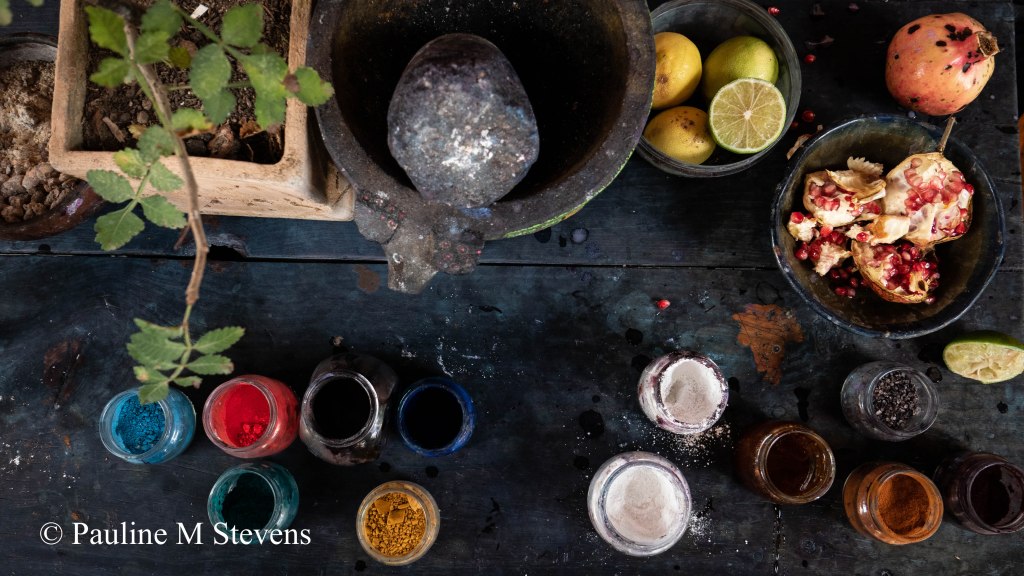

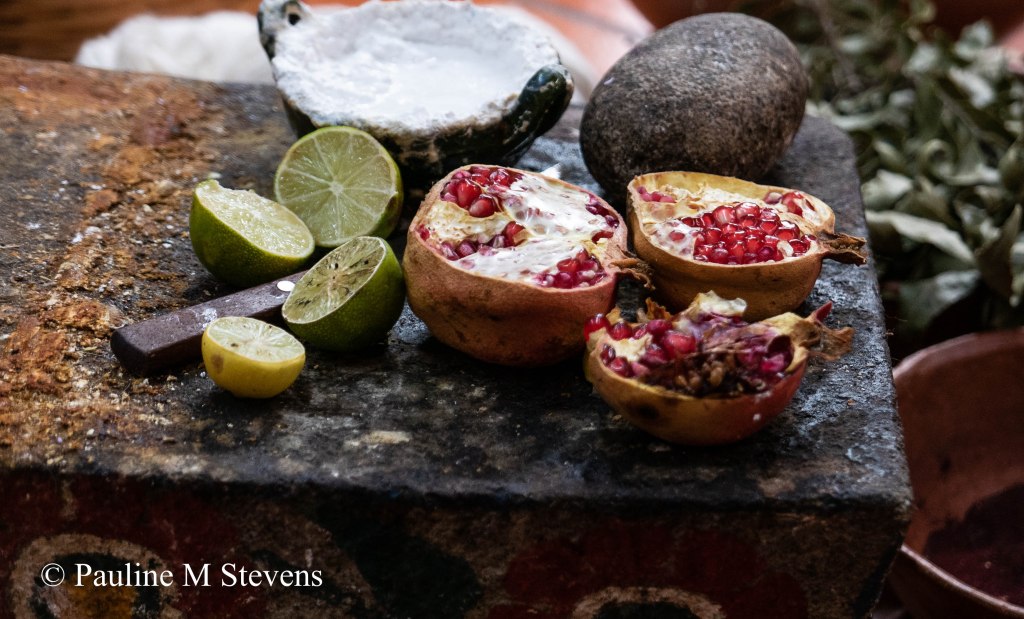
In Oaxaca, farming and knowing the local plants and trees is part of everyday life. Passed down from their ancestors, it’s common for people to proudly identify an indigo tree from afar or name each agave with precision. Everywhere we went, the people we met shared their knowledge of the local ecosystem—how they use it to heal, cook, and create.
Understanding this deep connection makes it easy to appreciate mezcal as Oaxaca’s unique spirit: a drink that is alive, shaped by, and inseparable from the soil in which it grows.

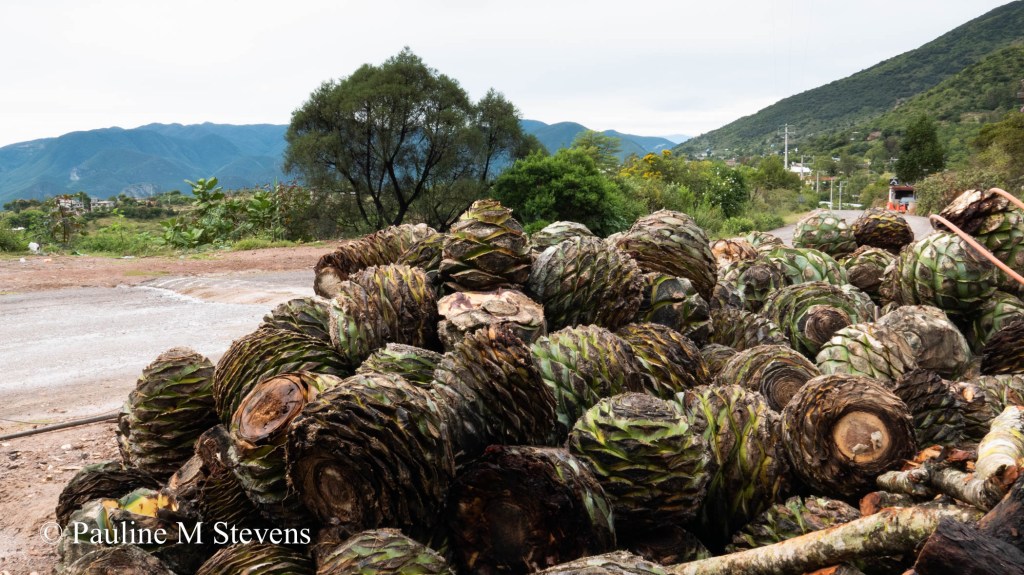
It all starts with the agave, which must “live in the soil” for 7 to 15 years before it can be harvested. There’s a narrow window of opportunity—once the agave blooms, it’s too late. To extract the piña, the plant’s leaves and roots are carefully removed, and the heart is then cooked for about three days in an underground pit filled with hot stones and covered with earth. It is in this slow, smoky process that mezcal develops its signature, distinctive flavor.
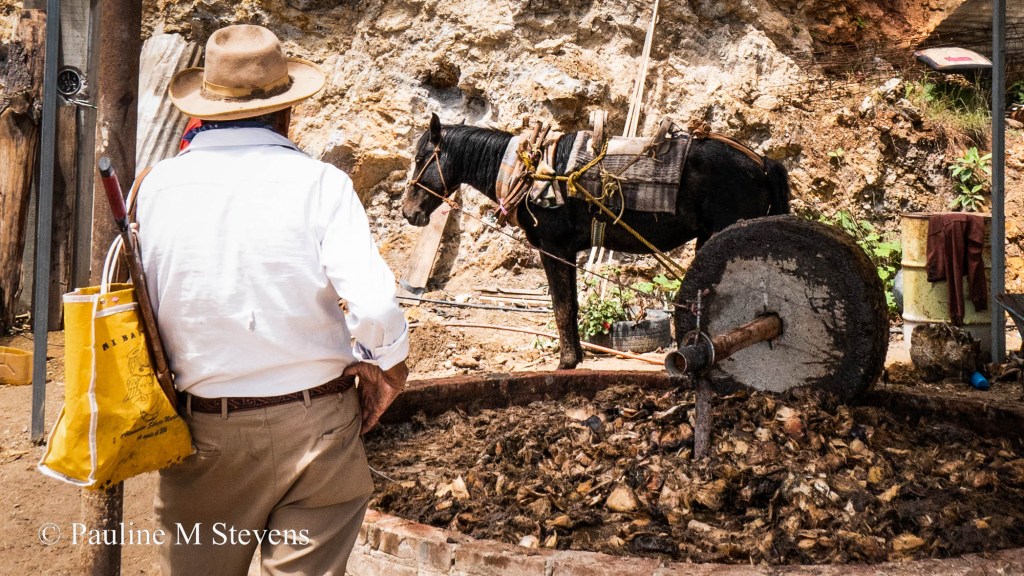
Three days later the smoked pieces are crushed for hours under a large stone wheel called a Tahona usually pulled by a horse.
Fermented for days and distilled two or three times allowing the flavors of the agave used come forward.

Completely inspired by Heritage Radio’s interview with Low Bank, I gained a firsthand understanding of how artisan mezcal is crafted by maestros who take immense pride in their work. Each batch carries a signature as unique as the maestro who creates it. Tasting and selecting a favorite mezcal becomes a deeply personal experience—no one can say one is better than another; it’s simply about finding the one that speaks to you. As the locals say: “You can never have too much mezcal. Mezcal will enchant you.” you.”

Photos by Pauline Stevens
Hello, I’m Pauline
 The Kitchen Press